Spats
Spatterdashes for the well-shod gentleman
📌 Pin it
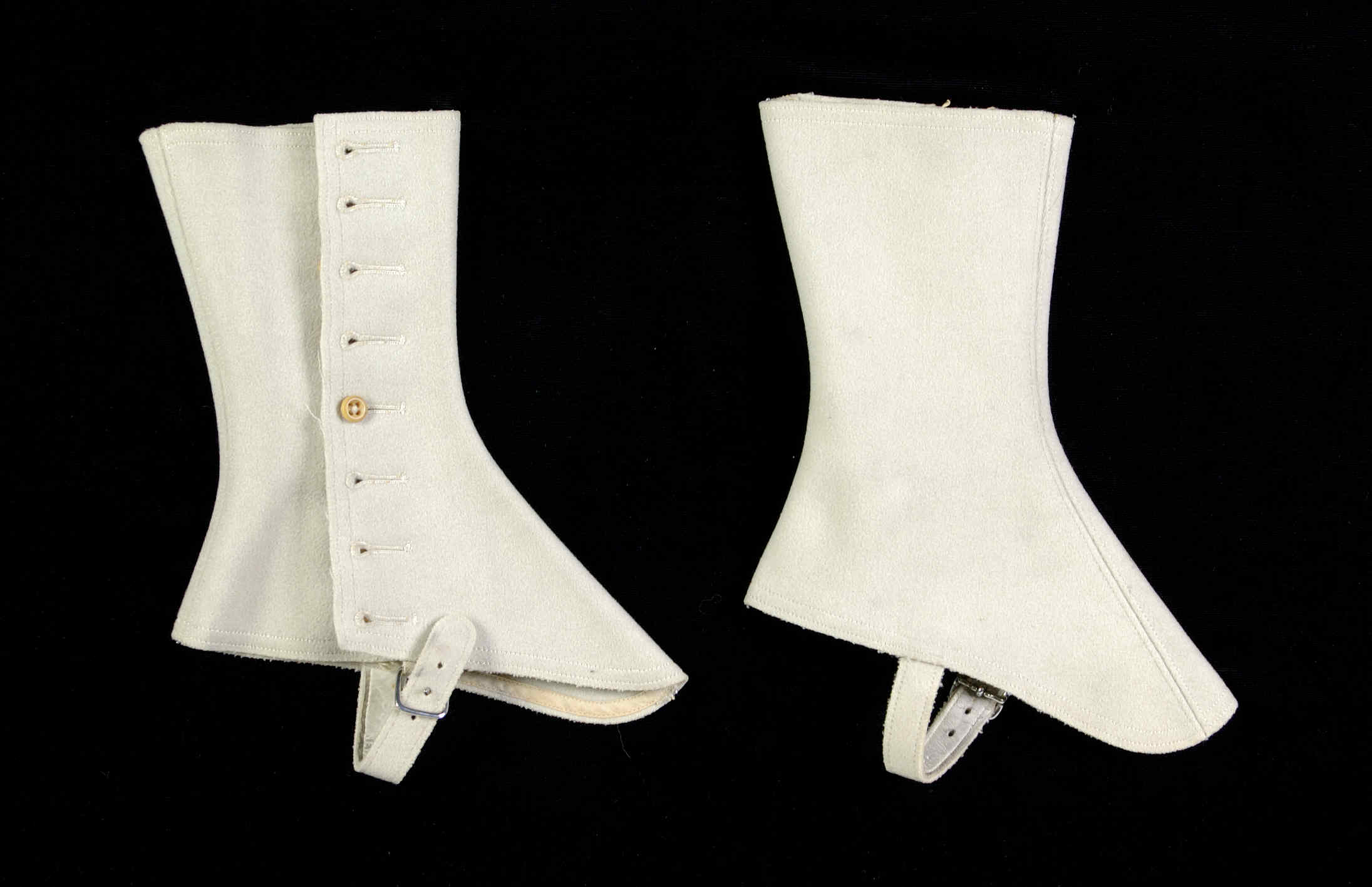
Spats — short for spatterdashes — were coverings of cloth, canvas or felt worn over the ankle and instep, buttoned up the outer side. Their job was purely practical at first: to protect shoes, socks and trouser cuffs from mud and 'spatter' on filthy Victorian streets. By the 1890s they had become a deliberate mark of the well-dressed man, most often in white, grey or fawn.
Worn with a morning coat and top hat, spats completed the uniform of formal daywear; military officers wore them on parade, and dandies wore them everywhere. They demanded attention to detail — a row of tiny buttons, a strap under the shoe — which was precisely the point: spats advertised a man with the leisure to fuss over his appearance and the means to keep white cloth clean in a soot-blackened city.
Their great age ran from the 1890s into the 1920s, after which cleaner streets, the motor car and changing tastes swept them away. They lingered longest as livery for footmen and coachmen, and as a costume shorthand for bankers, toffs and 1920s gangsters — the afterlife of a Victorian gentleman's necessity.
More in Fashion & Dress
All →
The Crinoline
A cage of spring steel that freed women's legs from the weight of a dozen petticoats — and turned every doorway into a comedy.

The Bustle
Fashion moved the volume from all around to all behind — a padded, projecting shelf that made the Victorian silhouette famous.

Mourning Dress
After Prince Albert died in 1861, the Queen wore black for forty years — and turned grief into the strictest dress code in fashion.