Tyntesfield
Wraxall, North Somerset, England

📌 Pin it
William Gibbs made one of England's great fortunes trading guano — dried seabird droppings — with South America, and he spent it on devotion. Between 1863 and 1866 he had a modest Georgian house near Bristol radically rebuilt by architect John Norton into a 106-room Gothic Revival extravaganza of Bath stone, steep roofs, turrets, and carved parapets. His cousin, novelist Charlotte Mary Yonge, called it 'like a church in spirit.'
The interiors match the silhouette. Glass by Powell, mosaics by Salviati, carved Gothic woodwork, and a private chapel by Arthur Blomfield rise around rooms that the Gibbs family filled for over a century without modernizing away the Victorian character. The house became the benchmark of Anglo-Catholic Gothic Revival domestic architecture.
When the last Gibbs heir died in 2001, the estate was nearly sold to private buyers. Instead, the National Trust ran a record-breaking fundraising campaign and opened it to the public in 2002 — offering visitors a house that feels less restored than interrupted, mid-Victorian life still warm in the rooms.
More in Houses & Interiors
All →
The Painted Ladies
America's most photographed Victorians — a row of Queen Anne showpieces glowing against the San Francisco skyline.
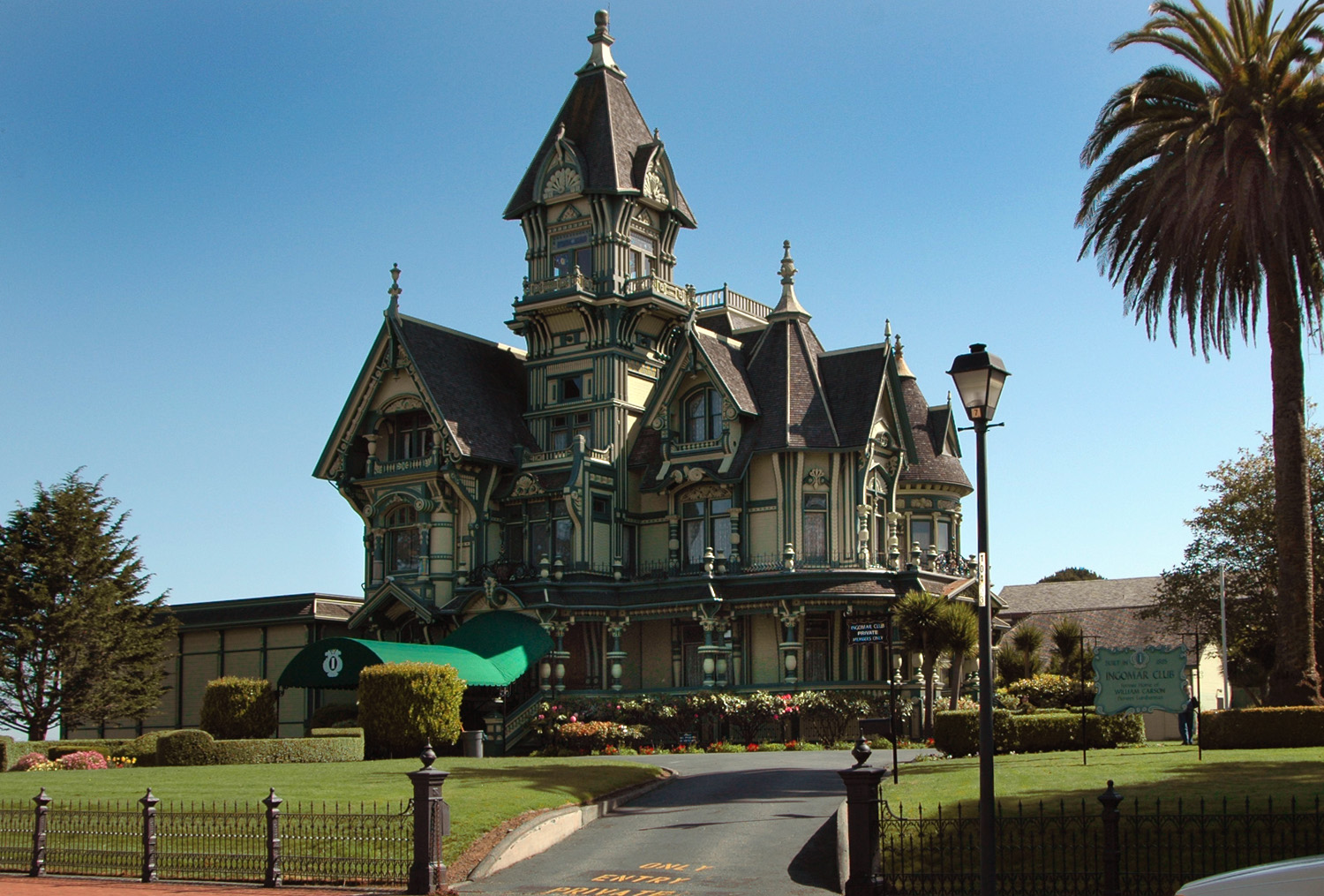
Carson Mansion
A lumber baron's $80,000 Queen Anne masterpiece — widely called the grandest Victorian home in America.

Cragside
The house where modern living began — a 'palace of a modern magician' and the first in the world lit by hydroelectricity.